The person behind the architect

A life lived before it became a life’s work.

The Belief Architect did not begin as a title. It emerged across adversity, sport, teaching, family, business, leadership and the long journey from seeking approval to trusting the person within.

“My story is not evidence that life will always be easy. It is evidence that the beliefs imposed upon us do not have to become the limits we live within.”

At sixteen, I was given a prognosis about decline. At seventy-one, I am still active, still grateful, and still becoming.

Before the titles

The person was always more than the prognosis.

Long before accountant, managing director, board member, chairman, speaker, author or coach, there was a small late-developing boy who often felt overshadowed, bullied and unseen. In February 1972, at sixteen, a fractured hip added a physical prognosis to the conclusions already forming around him: by twenty-five, he might need walking support.

That prognosis could have become an identity. Instead, it became one of the first structures he would have to question. Not through denial of vulnerability, but through the stubborn discovery that what others predict and what a person ultimately becomes are not always the same thing.

A life in chapters

The experiences beneath the architecture.

These moments are not presented as a list of achievements. Each one contributed a different piece to the understanding of identity, belief, purpose and human possibility.

1972

The fracture, and the forecast

A serious hip injury interrupted adolescence and sport at precisely the age when identity is often measured through belonging, strength and comparison. The medical forecast suggested physical limitation ahead. For somebody who already felt small and behind his peers, the injury could easily have confirmed the belief that less was possible.

What it revealed: A prognosis may describe risk. It does not have the right to become a complete definition of the person receiving it.

1973

Becoming strong enough to survive

Army life was not an environment designed around a weakened hip. Bertie formed a belief that survival required becoming as fit and strong as possible. The late developer rebuilt his body and his confidence, became a muscular young soldier and returned not only to rugby, but to captaincy of an under-20 provincial team.

What it revealed: In fact, belief begins before confidence. We act towards a possibility long enough for the person inside that possibility to emerge.

University

Finding a place through contribution

At university, participation replaced invisibility. Election to student bodies, service on the commerce council, involvement with AIESEC and leadership as a sports captain revealed that belonging did not have to be granted by comparison. It could be created through contribution, responsibility and presence.

What it revealed: Leadership is not proof that we are better than others. It is the decision to make what we have available to others.

Teaching

Discovering the joy of developing people

As a teacher and sports coach, Bertie found himself guiding young people through the academic, sporting and social challenges of growing up, and loving every minute of it. The language of The Belief Architect did not yet exist, but the instinct was already present: see the person, recognise possibility and help them trust what could still become.

What it revealed: Development is never only about transferring information. It is about what another person begins to believe because somebody saw them.

Business

Learning leadership from the inside

The business journey moved through accountant, management accountant, manager, director, managing director, board member and chairman. Each role offered new authority, but also exposed the human complexity beneath titles: pressure, responsibility, ethical judgement, uncertainty, loneliness and the need to remain internally aligned when others expect answers.

What it revealed: External success can create visibility without creating inner connection. Leadership does not break on the outside first; it shifts on the inside.

Family

The longest leadership commitment

Marriage, now forty-four years, became a life built with another person rather than an achievement completed alone. A daughter now living in the Netherlands and a son in Canada grew into successful professionals, partners and human beings. Three grandchildren in the Netherlands continue the story into another generation.

What it revealed: Legacy is not what people remember about our titles. It is what those closest to us experienced of our presence, love, example and belief in them.

The turning point

When achievement could no longer earn what the child still wanted.

At about fifty-five, tired and deeply demotivated, Bertie recognised a belief that had quietly directed much of his life. He had been living towards his father’s expectations, or towards what he believed those expectations to be, hoping achievement might eventually produce the love and approval he had never experienced in the same way as his brother.

His brother had been the early developer: head boy, first-team sportsman and visible success. Bertie had been smaller, a late developer, bullied at school and by his brother, and then physically interrupted by the fractured hip. Comparison became more than something other people did; it became an internal measurement of worth.

Whether or not that belief contained the whole truth, it had shaped decades. Then came a simple but decisive realisation: he could no longer live his life for approval that might never arrive.

“I will live my life as me, not as an argument for why somebody else should finally approve of me. I am Me. I am enough.”

Years later, his father acknowledged that he had “not done too badly.” It was not the declaration of pride the younger Bertie might once have needed. By then, something more important had changed: approval was no longer the foundation supporting his identity.

This was not a rejection of family. It was a return to self, and one of the deepest roots of the work he now offers others: unconditional self-acceptance cannot remain something we wait to receive from outside.
A life beyond work

Movement, curiosity, family and the refusal to become smaller.

The person behind the professional story has always been animated by discovery. Sport, travel and learning were never merely hobbies; they became ways of testing possibility and remaining fully alive.

Movement

A body once forecast to decline

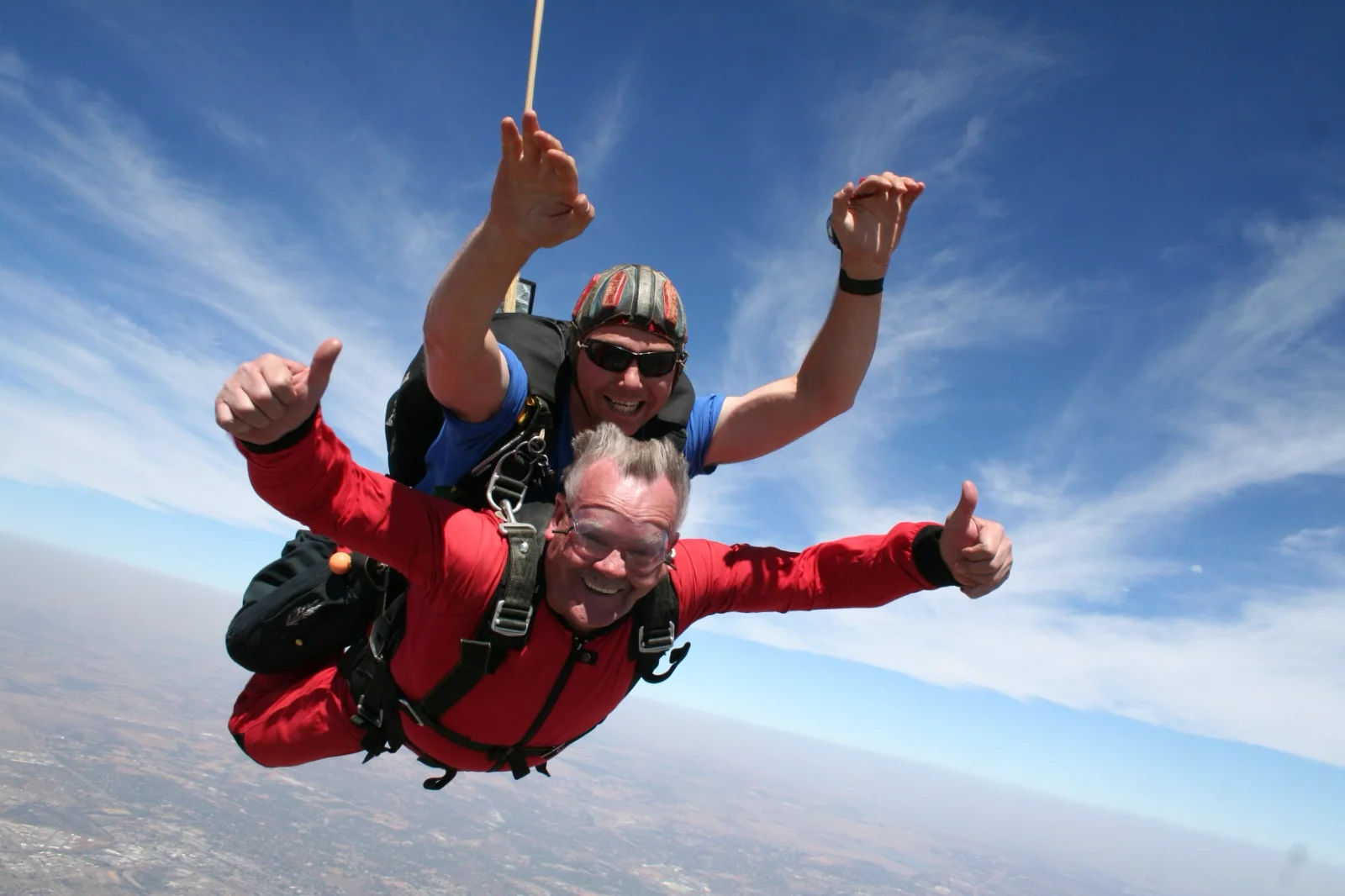
Rugby, cricket, swimming, cycling, mountain biking, hiking, scuba diving, skydiving and almost any sport involving a ball became expressions of vitality, not denial of the injury, but refusal to let it write the whole future.

Discovery

More than forty countries

Travel across more than forty countries fed a fascination with people, cultures, possibility and different ways of seeing, and the desire to discover many more remains alive.

Development

People were always the work

Teacher, coach, colleague, manager, director, chairman, mentor, speaker and family man are different roles connected by one enduring passion: helping people recognise and develop what may still be possible.

Faith

Gratitude before accomplishment

Behind the striving is gratitude to his Maker for the life he has been allowed to live, the person he has become and the time still available to contribute.

Legacy

Creation with urgency

At seventy-one, slowing down is not the chosen direction. Fewer days ahead create greater urgency to turn lived wisdom into courses, books, conversations and experiences that may serve others.

Becoming

No finished person

The Belief Architect is not somebody who has solved life. He is somebody who continues to question, learn, rebuild and create, and who invites others to do the same.

Why this became the work

The story was never really about overcoming a hip injury.

It was about the beliefs that entered through injury, comparison, bullying, ambition, achievement, approval, leadership, family and faith. Some beliefs strengthened. Some protected. Some drove extraordinary accomplishment. Others eventually became structures that needed redesign.

The Architecture of Becoming™ grew from that lived journey: the Mirror to see yourself, Belief to trust yourself, Love to accept yourself, the Lighthouse to guide yourself and Belief by Design™ to create deliberately.

“I help people remember who they were before the world told them who they could not become.”

The authority behind that sentence does not come from perfection. It comes from having lived the question.

Now return to your story

What have you been trying to prove, and to whom?

Bertie’s story is offered as a mirror, not a measure. You do not need his experiences for your own questions to matter.

Which conclusion about your future did somebody else write?
Where has achievement become a search for approval?
What might change if you accepted that you are already enough?

The person, not the title

A life shared, tested and still becoming.

Belief is not a theory to Bertie. It has been tested through family, work, public contribution, physical challenge and the decision to keep discovering what may still be possible.

Teaching, leadership, mentoring, coaching, speaking and writing have all been different names for the same work: helping people recognise what belief builds, and what it can quietly dismantle when it is left unexamined.

See the work and the recognition →